 Alliance for Catholic Education

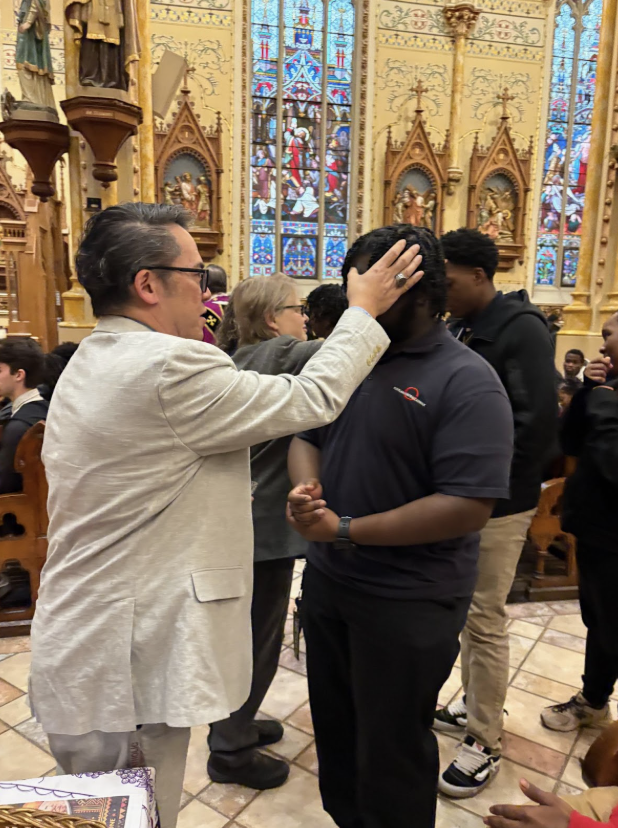
“Remember you are dust, and to dust you shall return.” This Ash Wednesday anthem, spoken as our foreheads are marked with a smudgy black cross, is a reminder of our smallness, creatureliness, and utter dependence on God. As we enter this season of self-denial and cross-bearing, I would like to suggest that living out this truth is at the heart of being an ACE teacher.
“Remember you are dust, and to dust you shall return.” When we receive our ashes, we are reminded of our smallness in a cosmos that is vast beyond all comprehension. We are confronted with the reality that our impact in this world is highly limited in both space and time.
ACE teachers are familiar with this feeling of smallness. For some of us, this feeling is literal—we have students much bigger than we are! For all of us, the feeling of smallness emerges when we fail to consistently meet the diverse needs and desires of our students. When a new student arrives from a foreign country speaking no English, when you learn a student is homeless, or even when most of your students fail a test, the feeling of smallness can be overwhelming.
Lent challenges us to see this smallness as a gift. The prayer of St. Oscar Romero says, “We cannot do everything, and there is a sense of liberation in realizing that.” Acknowledging and living into our smallness allows us to work exactly where we are with exactly who we have with us and what we have around us. Because we are small, we cannot do everything. But because we are small, we can attend to the particular needs in front of us as best we can in ways that others cannot. As ACE teachers, we do small work (do not confuse small with easy!), but it is precisely in embracing the smallness of our work that its impact becomes great. Lent offers us an opportunity to re-dedicate ourselves to the small, difficult, demanding, fruitful work to which we have been called.
“Remember you are dust, and to dust you shall return.” When we receive our ashes, we are also reminded of our creatureliness, that is, that we are created beings whose life comes from God and God’s creation. When we remember that we are dust, we remember that we are embodied creatures who do embodied work. While teaching might be perceived as a mostly academic or mental activity, those of us who teach know that good teaching is active, sweaty, sometimes snotty work. Circulating the classroom, handing out and collecting papers, giving hugs and high-fives, and even smiling (or glaring) at students are but a few examples of how teaching is a physical, embodied exercise.
As teachers, we are acutely aware of the impact our physical presence and activity (or lack thereof) can have on our students. Circulating rather than sitting at our desks, fist-bumping students as they enter the classroom rather than allowing them to enter with no greeting, going out of our way to check in with a student—these are physical actions that demonstrate to students our love and care for them. This Lent, remembering we are dust is a good way to remember that God created us as physical beings, and, as a result, that we are called to use our physical actions in ways that make our students ever more aware of our and God’s love and care for them.
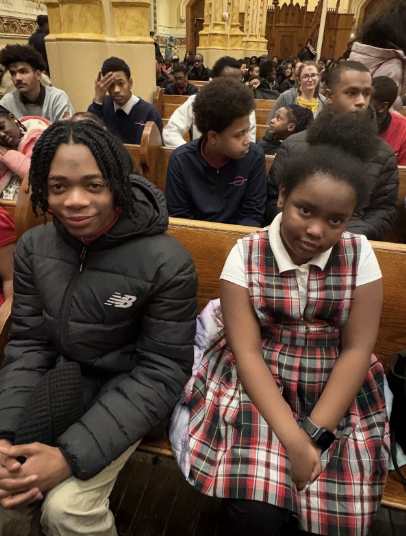
“Remember you are dust, and to dust you shall return.” Finally, receiving our ashes reminds us of our utter dependence on God. Being small creatures, our very lives are the result of God’s constant creative power, without which we would return to dust. Being small creatures and new teachers, it is not by our own strength and goodness that we are capable of doing the work that we do, but rather through the Spirit God sends to sustain and empower us. In his first letter to the Corinthians, St. Paul summarizes well the experience of an ACE teacher: “When I came to you, brethren, I did not come proclaiming to you the testimony of God in lofty words or wisdom. For I decided to know nothing among you except Jesus Christ and him crucified. And I was with you in weakness and in much fear and trembling; and my speech and my message were not in plausible words of wisdom, but in demonstration of the Spirit and of power, that your faith might not rest in the wisdom of men but in the power of God” (2:1-5).
The ACE experience is full of moments of weakness, of fear and trembling, of feeling as if we know nothing. And yet, we persevere, even when we don’t want to or when the task feels impossible, in an incredible demonstration of God’s Spirit working through us. The immense challenges of teaching and our constant mistakes and failures make it clear that this work can be done well only by recognizing our complete dependence on God and having faith that God is working through us. For as St. Paul reminds the Corinthians a few verses later, “What no eye has seen, nor ear heard, nor the heart of man conceived, what God has prepared for those who love him” (2:9). In acknowledging our utter dependence on God, we open ourselves up to the good work God has in store for us and those we serve by trusting that our failures are no match for God’s divine touch.
“Remember you are dust, and to dust you shall return.” This Lenten season challenges us to recognize our smallness, creatureliness, and dependence on God as gifts aptly suited for the difficult work of being an ACE teacher. In receiving these gifts with gratitude this Lent, may we become stronger educators and more faithful followers of Christ!