 Alliance for Catholic Education

Toka is an Indigenous sport played by the Piipaash (Maricopa) and Akimel O’odham (Pima) nations. This traditional game is experiencing a resurgence thanks to passionate athletes like April Morago.
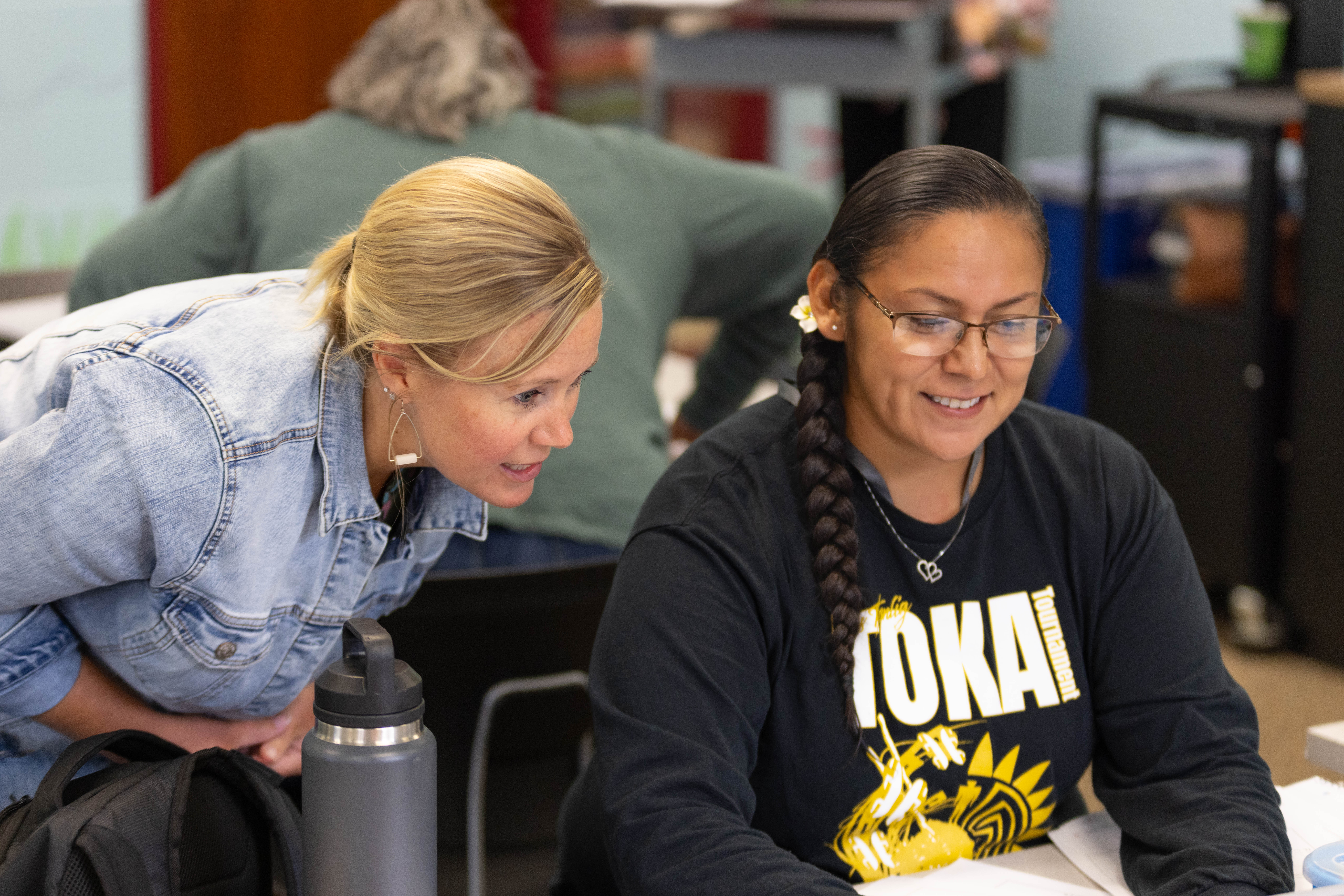 When she isn’t on the toka field, Morago can be found teaching P.E. at St. Peter’s Indian Mission Catholic School in Bapchule, Arizona, or pursuing her B.A. in elementary education through the AICSN Holy Cross Fellows Program. For her, toka is more than just a game—it’s a way to honor her heritage and pass on valuable lessons to her community.
Toka is played exclusively by women and bears similarities to field hockey. Teams use curved wooden sticks, called u’saga, to drive the gamepiece, known as the o’la, toward the opponent’s goal line. Toka is a traditional sport for both the Piipaash and Akimel O’odham tribal communities, with subtle differences in how it is played in each community. The sport has been played for generations by these tribal communities, yet the sport has been making a steady comeback the past 30 years.
Morago did not grow up playing the sport, yet she recently decided that she wanted to take up toka herself. She reached out to a childhood friend, whose mother is known as the “reviver of toka,” to learn. One of the first lessons for any new player is crafting her u’saga.
“If I go with somebody who is brand new to the game, I give them an opportunity to pick their own stick because they can bond with it,” Morago explained. “They learn the process, and they understand how much work goes into finding and making each u’saga.”
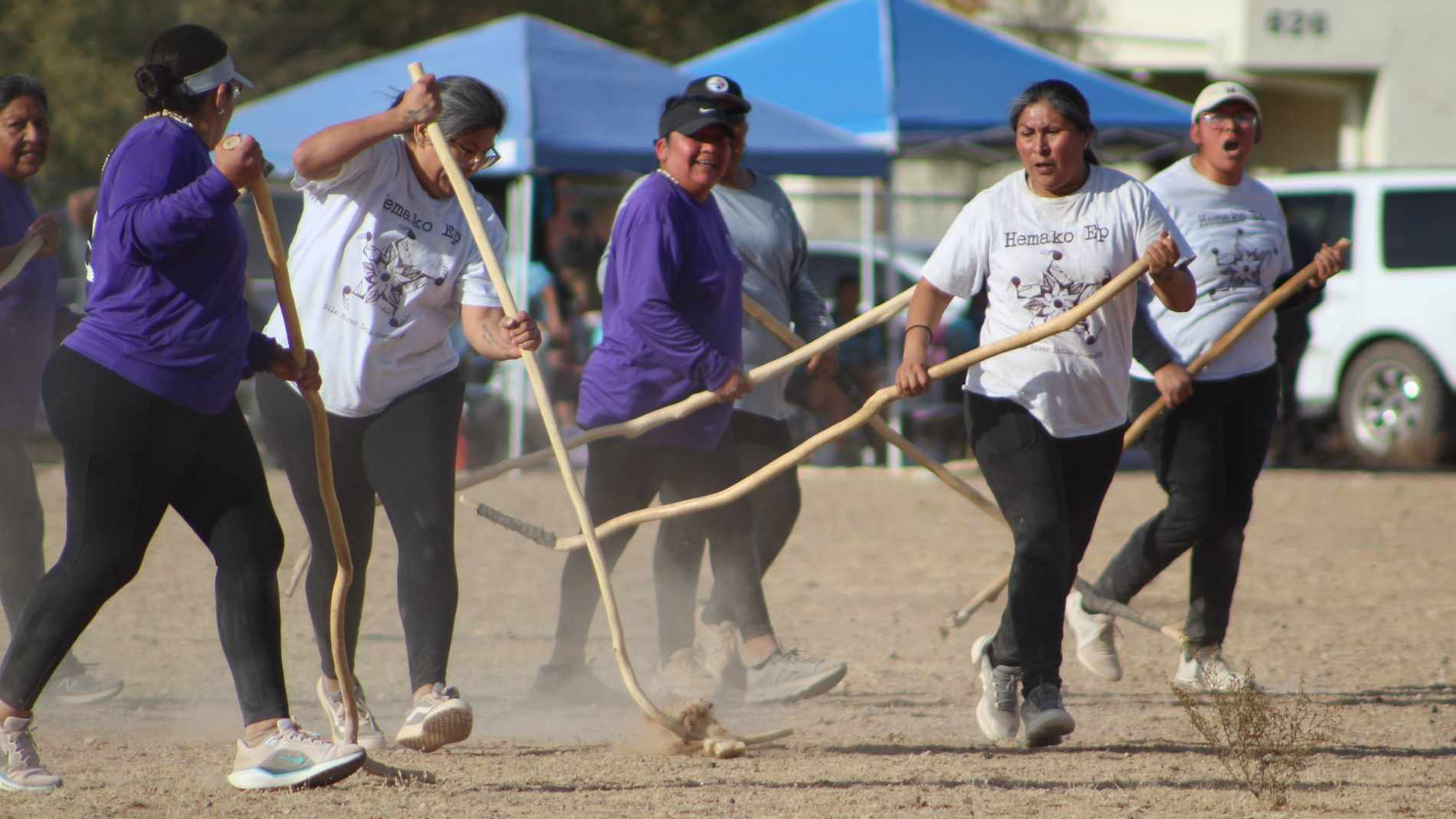 Players search through mesquite thickets for the right branch. Once chosen, they offer a blessing, such as corn or water, to honor the tree. The branch is then heated over a coal fire, releasing an aromatic scent Morago describes as “almost like popcorn.” Once the stick is sufficiently heated (and pliable), players curve it into shape and let it cool against a chain link fence.
The o’la, too, is handmade. It is crafted from two- to three-inch pieces of mesquite sewn together with sinew. No two o’la are exactly alike.
With stick and gamepiece in hand, players can compete anywhere. “There is no standardized field,” Morago said. “We’ve played on dirt, in sand, on grass, even in a riverbed.” Much like baseball, the field dimensions vary. Team sizes are also flexible and adjust to suit the team with fewer players. For instance, if one team has ten players and the other six, the game is played six-on-six.
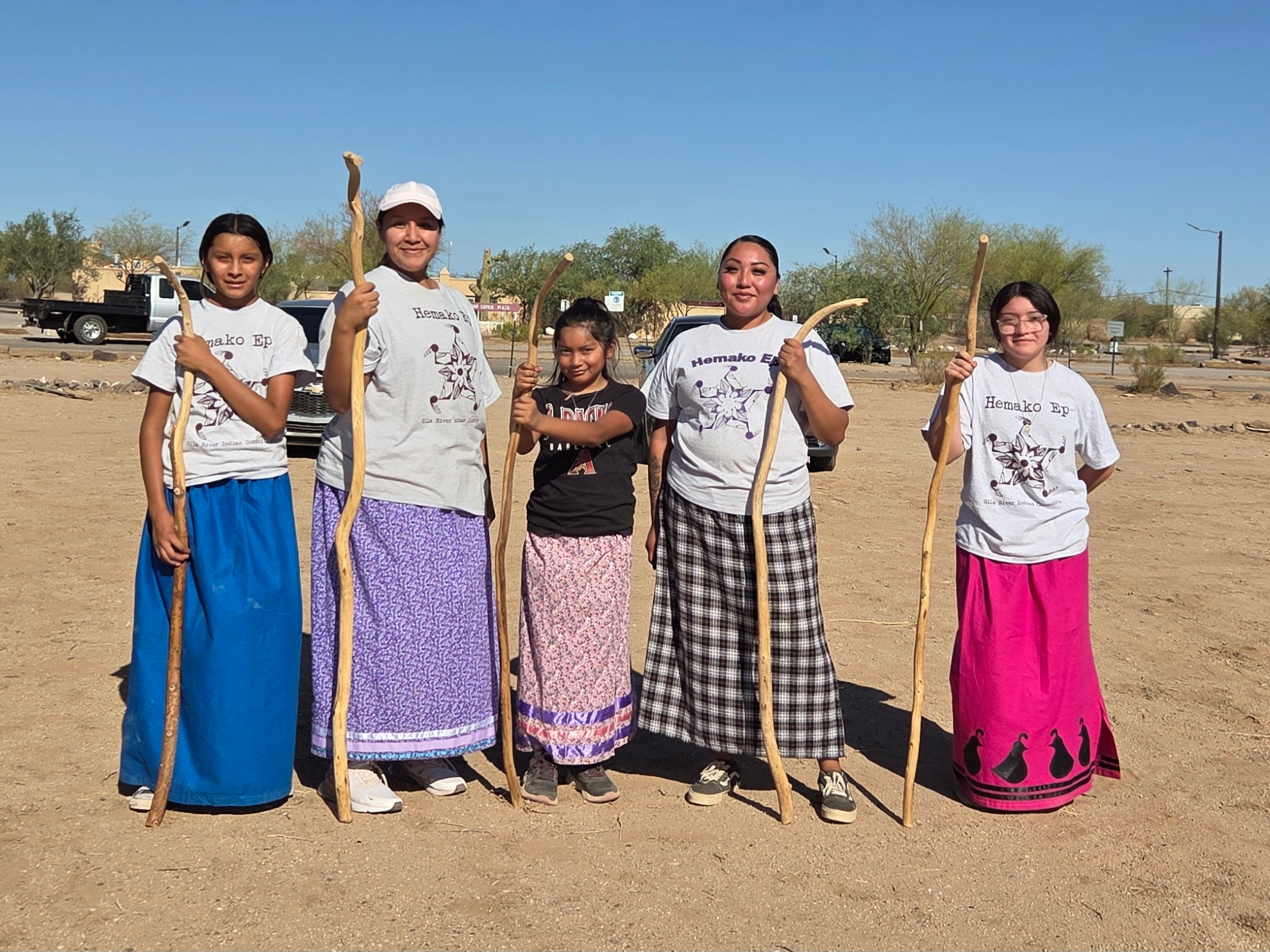 Toka is becoming a family pastime for April Morago and her daughters. April has taught all four of her daughters how to play the sport. Morago is also sharing the sport with her school community. She led a toka demonstration during St. Peter’s Indian Mission Catholic School’s centennial celebration.
Morago loves playing toka and views it as an opportunity to exercise, make friends, and honor her culture. She believes the sport carries important life lessons. As Morago said, “Toka will teach you to be able to take the hits in life.”
To learn more about toka, check out the following resources:
“Toka, Traditional O’oodham GAme, Carried On Through Generations of Women”
“A woman-forward sport honors traditional indigenous culture”
“Traditional O’oodham Women’s Game Thoka”