 Alliance for Catholic Education
I found myself recently re-reading Doris Kearns Goodwin’s Team of Rivals. The historical biography tells the story of Abraham Lincoln’s presidency, exploring how he formed and led his cabinet through the challenge of keeping a country together. It is a compelling example of leadership, particularly when thinking about how to engineer improvement for our communities. As the title suggests, Lincoln intentionally incorporated many of his biggest rivals on his team– individuals often with opposing views or who were more popular, more educated, or more experienced than himself. Although the leadership of a school is not as high-stakes as reuniting an entire nation, the parallels to the importance for how we, as leaders, need to intentionally cultivate relationships with all stakeholders in ways that engage them in disciplined inquiry and foster shared ownership of the organization’s vision and goals.
In the Human Capital Management class that I teach, and throughout the Remick Program, we often talk about Collins’ (2001) concept of ensuring that you have the right people on the bus – people who share the same values and possess the necessary skills to thrive in their roles. Re-reading Team of Rivals made me wonder – why did Lincoln see his rivals as the right people on the bus? Wouldn’t it have just been easier to work with those that shared his same values and goals, rather than navigating the challenges that came from these differing viewpoints?
This is why Lincoln’s leadership is so fascinating. Rather than pushing these people away, Lincoln recognized the value they brought, and then used his leadership to ensure they were in the right seats on the bus. As Goodwin describes, “He knew how to use the talents of others without letting them feel diminished in his presence.” Lincoln’s leadership is a reminder that the most effective leaders don’t simply surround themselves with people who agree with their ideas, but rather, they recognize that respectful dissent sharpens ideas and prevents blind spots. Transformational leaders engineer improvement by inviting these voices of conflict in, creating a safe space to voice concerns, and put their own ideas aside to listen deeply to what someone else finds important to share. It is through this constructive dialogue that these ideas can be brought together to strengthen the pursuit of the shared purpose.
So now in my team meetings, whenever someone shares an idea, especially if I might disagree with it, I strive to cultivate the practice to simply ask them to “say more.” This pause and time to engage in richer discourse helps me to step back from my own perspective to understand them more fully, and to think more critically about what we’re striving to accomplish. Even if it takes longer, taking the time to embrace creative conflict fosters a community where we can flourish better together – to the betterment of all whom we serve.
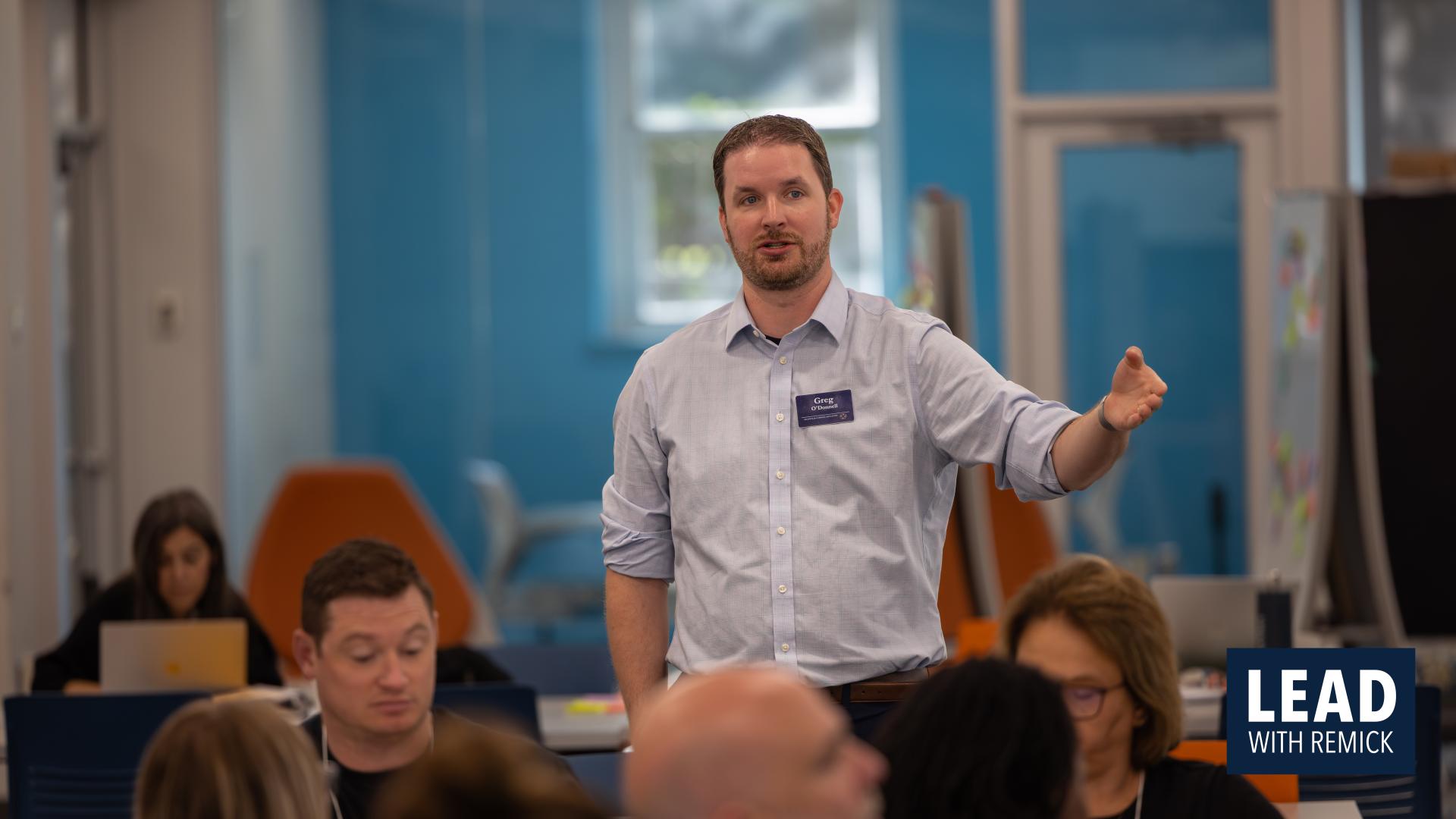
Greg O'Donnell
Director, ACE Principal Academy; Assistant Professor, Institute for Educational Initiatives
References:
Collins, J. (2001). Good to great. HarperCollins.
Goodwin, D. K. (2005). Team of rivals: The political genius of Abraham Lincoln. Simon & Schuster.